
Glaucoma
Overview
Glaucoma is a group of eye diseases that damage the optic nerve, often due to high intraocular pressure, leading to progressive vision loss and potential blindness.
Causes And Medications
Causes
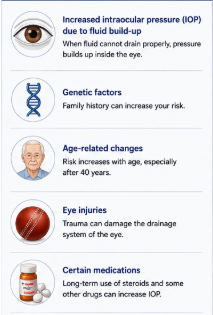
- Increased intraocular pressure (IOP) due to fluid build-up
- Genetic factors
- Age-related changes
- Eye injuries
- Certain medications
- Medical conditions such as diabetes
Medications
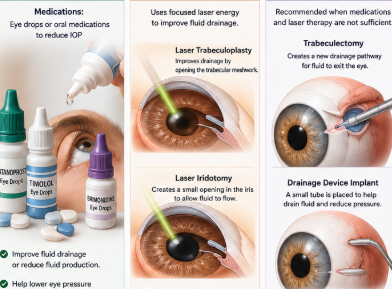
- Medications:
- Eye drops or oral medications to reduce IOP
- Laser Therapy
- Trabeculoplasty: Laser treatment to improve drainage in open-angle glaucoma.
- Iridotomy: Creates a small hole in the iris to improve fluid drainage in angle-closure glaucoma.
- Cyclophotocoagulation: Laser treatment to reduce fluid production.
Glaucoma Examination at ABO
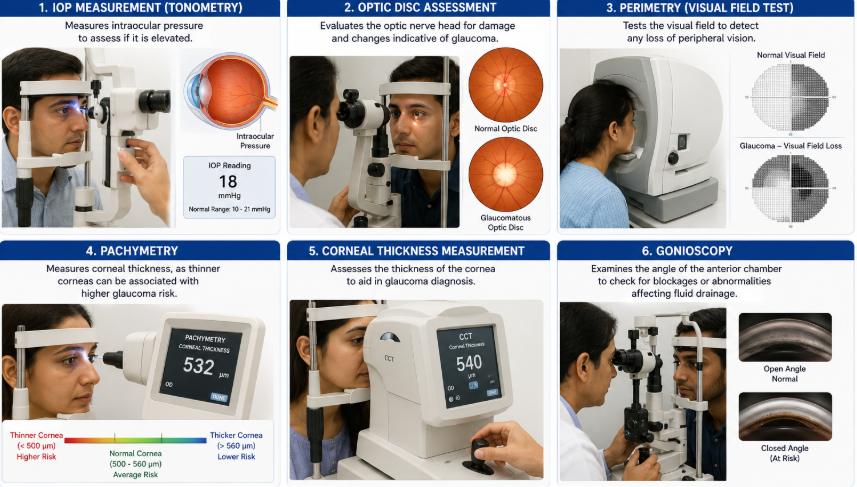
- OP Measurement (Tonometry): Measures intraocular pressure to assess if it is elevated.
- Optic Disc Assessment: Evaluates the optic nerve head for damage and changes indicative of glaucoma.
- Perimetry: Tests the visual field to detect any loss of peripheral vision.
- Pachymetry: Measures corneal thickness, as thinner corneas can be associated with higher glaucoma risk.
- Corneal Thickness Measurement: Assesses the thickness of the cornea to aid in glaucoma diagnosis.
- Gonioscopy: Examines the angle of the anterior chamber to check for blockages or abnormalities affecting fluid drainage.
Treatments @ ABO
Surgery:
- Trabeculectomy: Creates a new drainage pathway for aqueous humor.
- Glaucoma Drainage Devices (Implants): Tiny tubes inserted to help drain fluid.
- Minimally Invasive Glaucoma Surgery (MIGS): Newer techniques with fewer complications and faster recovery.
Lifestyle Changes:
- Regular eye exams, managing underlying conditions, and adherence to prescribed treatments.