
Cornea
Overview
Different layers of Cornea
- Epithelium: The outermost layer, which helps protect the cornea and aids in healing.
- Bowman’s Layer: A tough layer that provides structural support.
- Stroma: The thick middle layer, which contains collagen fibers and provides the cornea’s strength and elasticity.
- Descemet’s Membrane: A thin but strong layer that supports the inner layers of the cornea.
- Endothelium: The innermost layer, which helps maintain the cornea’s clarity by regulating fluid levels.
Different types of Cornea disorders
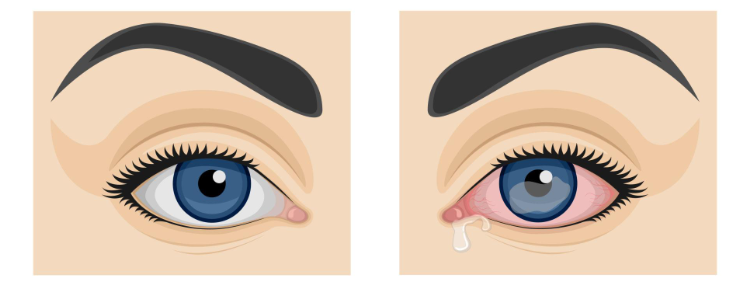
Keratitis
Infections (bacterial, viral, fungal, parasitic), injury, prolonged contact lens wear, contaminated contact lenses, autoimmune diseases
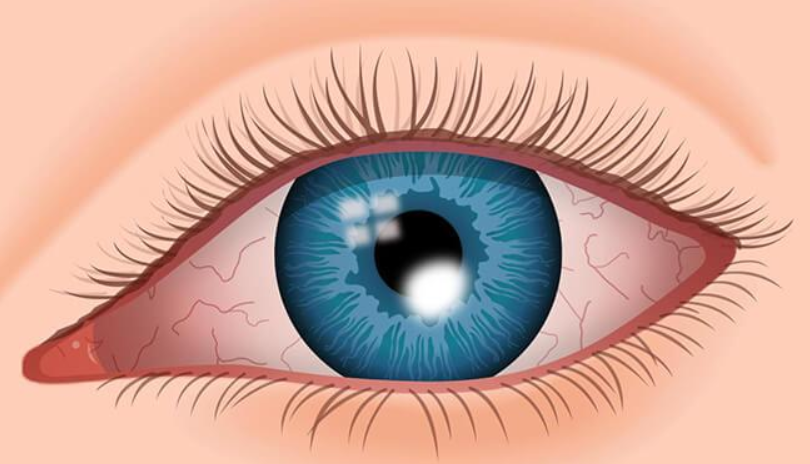
Corneal Ulcer
Infections, severe dry eye, eyelid disorders, trauma, extended contact lens wear
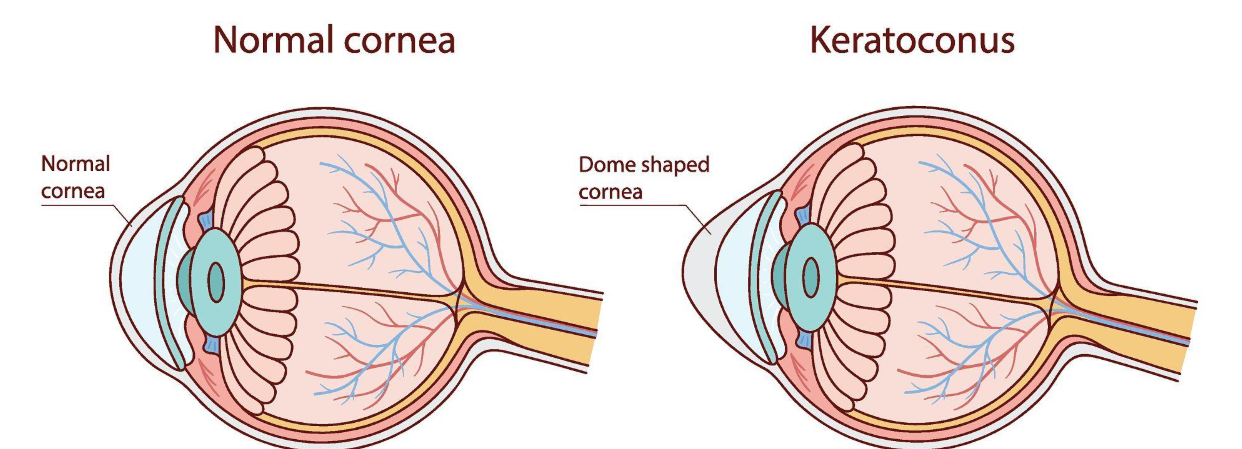
Keratoconus
Exact cause unknown, possibly genetic factors and eye rubbing
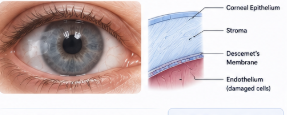
Fuchs’ Endothelial Dystrophy
Genetic factors, age-related changes
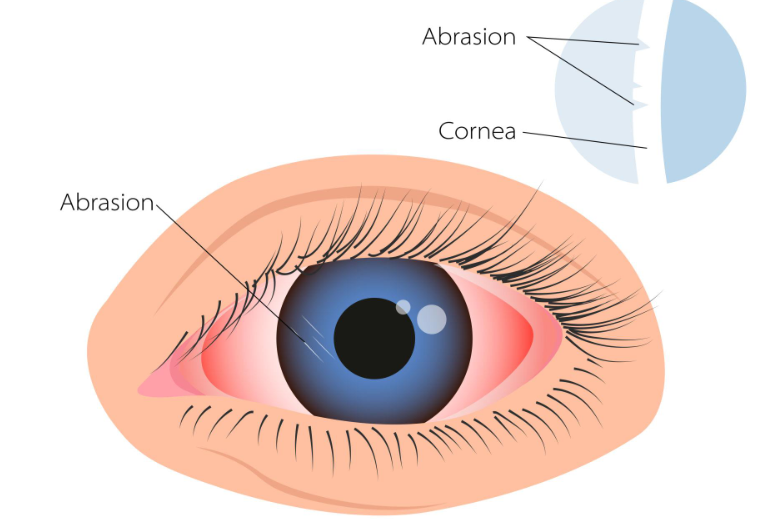
Corneal Abrasion
Trauma, foreign bodies, contact lens complications
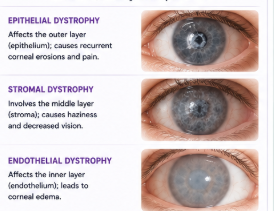
Corneal Dystrophies
Genetic factors
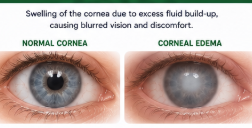
Corneal Edema
Endothelial dysfunction (e.g., Fuchs’ dystrophy), trauma, post-surgical changes, inflammation
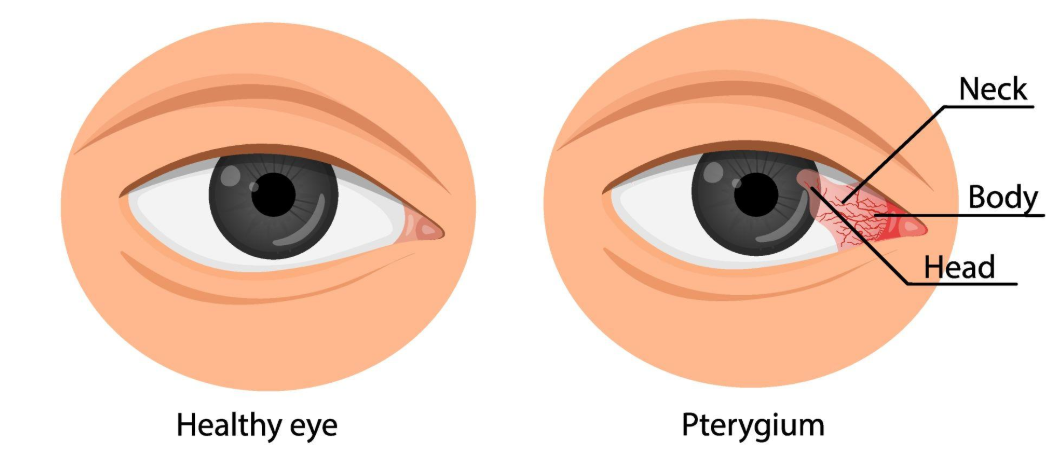
Pterygium
Prolonged exposure to UV light, wind, dust, dry conditions
Symptoms
- Redness, pain, excessive tearing, blurred vision, light sensitivity, discharge, sensation of something in the eye
- Severe pain, redness, blurred vision, discharge, light sensitivity, white or gray spot on the cornea
- Progressive thinning and bulging of the cornea into a cone shape, distorted vision, glare, light sensitivity
- Gradual loss of endothelial cells, corneal swelling (edema), blurred vision, glare, halos around lights, pain
- Pain, redness, tearing, light sensitivity, sensation of something in the eye
- Vision impairment, glare, discomfort; types include lattice dystrophy, granular dystrophy, macular dystrophy
- Blurred vision, halos around lights, sensation of pressure or pain
- Growth of fleshy tissue on the conjunctiva extending onto the cornea, redness, irritation, blurred vision if it encroaches on the visual axis
Treatments @ ABO
- Antimicrobial medications (antibiotics, antivirals, antifungals), anti-inflammatory eye drops, proper contact lens hygiene, severe cases may require corneal transplantation
- Antimicrobial therapy, protective eyewear, severe cases may require corneal transplantation
- Glasses or soft contact lenses (mild cases), rigid gas-permeable contact lenses (advanced cases), corneal cross-linking, severe cases may require corneal transplantation
- Hypertonic saline eye drops, soft contact lenses, advanced cases may require endothelial keratoplasty or full-thickness corneal transplantation
- Pain, redness, tearing, light sensitivity, sensation of something Lubricating eye drops, antibiotic eye drops to prevent infection, severe cases may require bandage contact lens or patching
- Lubricating eye drops, contact lenses to improve vision, severe cases may require corneal transplantation
- Hypertonic saline eye drops, reducing intraocular pressure, severe cases may require corneal transplantation
- Lubricating eye drops, anti-inflammatory medications, surgical removal if it affects vision or causes significant discomfort