
Refractive Surgery
Overview
A refractive error is something about the natural shape of your eyes that makes your vision blurry. Refractive errors are some of the most common vision problems people experience.
The parts of your eyes work together like a relay team to pass light that enters your eye along a pathway to your brain. Light passes through your cornea — the clear part at the front of your eye. Your cornea focuses that light through your lens into a signal that hits your retina — the layer at the very back of your eyeball. Your retina converts that light into electrical signals that your optic nerve sends to your brain. Your brain then uses those signals to create the images you see.
Types Of Refractive Error
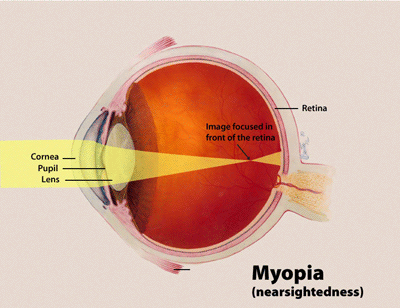
Myopia (Nearsightedness)
People with myopia can see close objects clearly but struggle to see distant objects because light focuses in front of the retina.
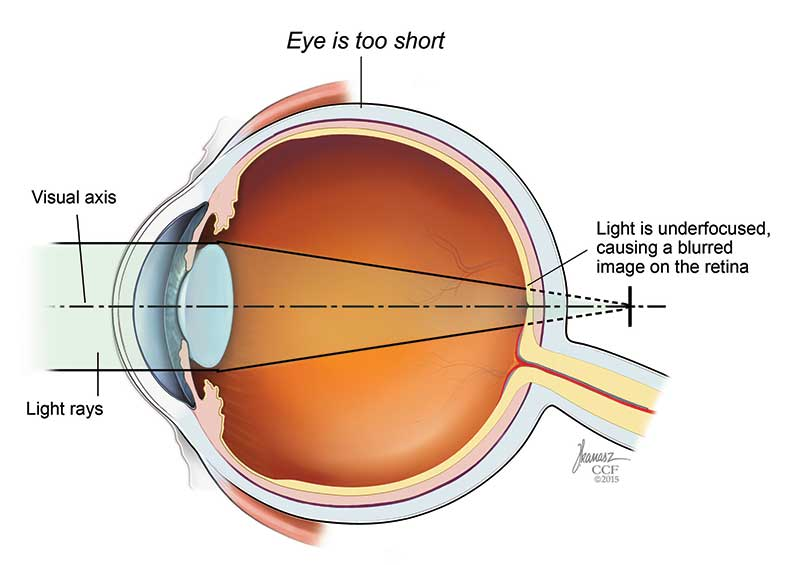
Hyperopia (Farsightedness)
Those with hyperopia can see distant objects more clearly than close ones because light focuses behind the retina.
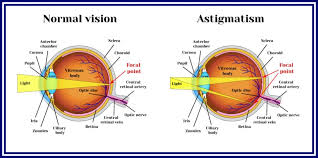
Astigmatism
This occurs when the cornea or lens is irregularly shaped, causing blurred or distorted vision at all distances.
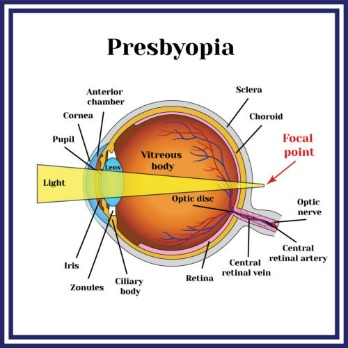
Presbyopia
This is an age-related condition where the lens becomes less flexible, making it difficult to focus on close objects, often becoming noticeable in middle age.
Symptoms of Refractive error
- Blurred vision: Difficulty seeing objects clearly at various distances.
- Eye strain: Discomfort or fatigue from focusing on tasks like reading or computer use.
- Headaches: Often due to the eyes working hard to focus properly.
- Difficulty seeing at night: Trouble seeing clearly in low light conditions.
- Double vision: Seeing two images of a single object, especially with astigmatism.
- Squinting: Involuntary action to try to improve focus and clarity.
- Frequent changes in prescription: Needing new glasses or contact lenses more often.
- Difficulty with detailed tasks: Problems with activities requiring sharp vision, such as reading or sewing